Keep your bike ready for the next ride
Simple cleaning and regular care for your bike, with extra attention for e-bikes.
A little regular care goes a long way
A clean bike is easier to check, quieter to ride and more pleasant to work on. You don’t need a workshop full of products: a gentle wash, the right drivetrain care and a few regular checks are a useful starting point.
The basics apply to road, gravel, mountain, hybrid, city, folding and children’s bikes. How often you need them depends on the conditions and use. A muddy trail ride or salty winter commute calls for more attention than a dry spin.
E-bikes need the same mechanical care, plus a careful approach to electrical parts, battery handling and charging. Your bike and component manuals take priority, particularly for fixed batteries, suspension and unusual drivetrain systems.
Build a simple bike-cleaning kit
Start with a bucket of water, a bike-compatible cleaner, a soft sponge or wash mitt and clean cloths. A gentle water supply can help where your bike maker permits it. Keep a separate brush and cloth for the oily drivetrain.
Choose cleaners for your bike’s finish, seals and components. Follow dilution and contact-time instructions, and work in the shade so products don’t dry onto the surface. Strong household solvents and abrasive pads can do more harm than good.
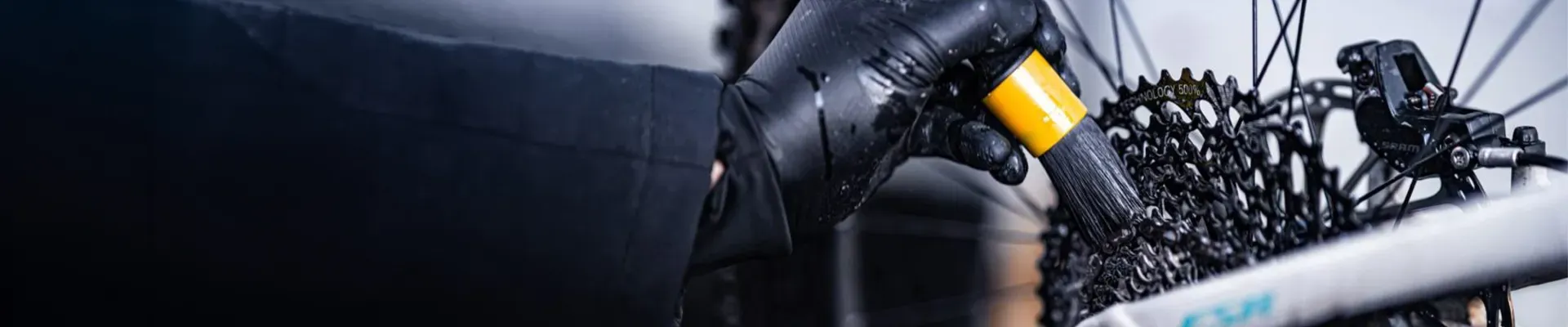
A soft brush reaches around the frame and wheels; a dedicated drivetrain brush tackles dirt around sprockets. Keep those dirty brushes away from brake surfaces. Add suitable chain lubricant if your bike uses an oil-lubricated chain.
Make the bike easy to work on
A repair stand can hold the bike at a comfortable height and free both hands. Check its load rating and your bike’s permitted clamping points before lifting it, especially with a heavy e-bike or carbon parts.
If you’re working without a stand, keep the bike stable on level ground. Don’t rest it on a vulnerable display or controls. Take care around rotating wheels, gears and brake rotors, and keep loose clothing and fingers clear.
How to wash your bike gently
- Prepare the bike. Let hot parts cool, remove luggage that blocks access and check any electrical-component precautions. Switch an e-bike off and follow the e-bike section below before adding water.
- Loosen dirt with gentle water or a wet sponge. Soften dried mud rather than grinding it into the finish. Avoid pressure washers and steam cleaners; don’t direct water into bearings, seals, electrical connections or openings.
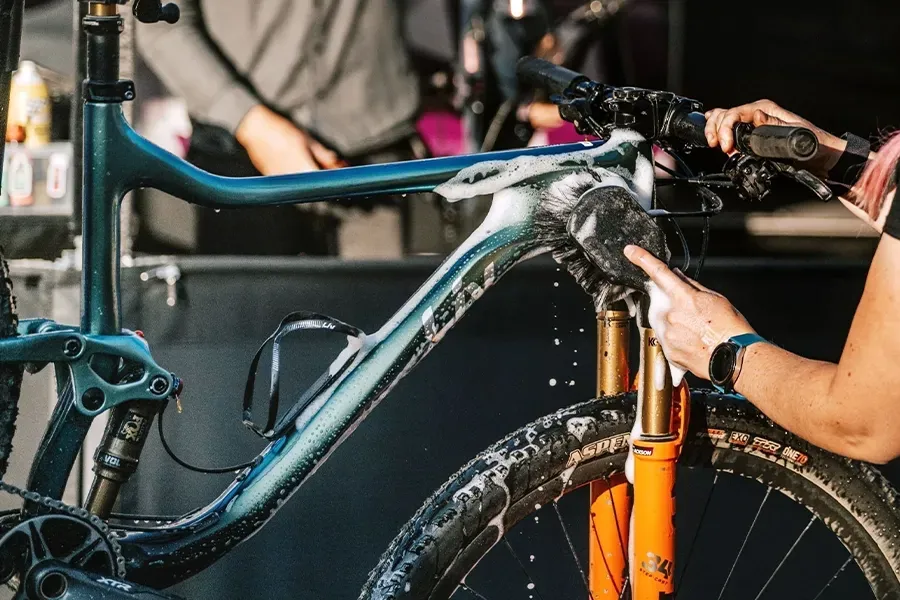
- Apply suitable cleaner as directed. Use a soft mitt or brush on the frame, fork and wheels, working from cleaner areas towards dirtier ones. Keep drivetrain grime and oily runoff away from brakes.
- Clean the drivetrain separately using products suitable for its lubrication system. Don’t flood bearings or wash degreaser through hubs and bottom brackets.
- Rinse gently or wipe with clean damp cloths as appropriate to the bike and cleaner. Remove residue without soaking components.
- Dry with clean cloths, inspect the bike and restore any required chain lubrication. Check wheel security, tyre condition and brake operation before your next ride.
Rider Tip
Use separate cloths for the frame, drivetrain and brakes. A cloth that looks clean can still carry enough chain oil to contaminate a braking surface.
Extra care when cleaning an e-bike
Switch the system off before cleaning and disconnect the charger. Check the instructions for your bike and drive system: remove a user-removable battery or display only where the maker specifies it, and fit the prescribed covers. A fixed battery isn’t a reason to dismantle the bike.
Use a lightly damp cloth around the motor exterior, display and controls. Avoid spraying battery mounts, charge ports and cable connections, and never immerse electrical parts. Don’t use a pressure washer or steam cleaner.
Allow the bike and electrical contact areas to dry fully before reconnecting parts or charging. Check that the battery is correctly secured after refitting. Leave motor housings, battery packs and sealed electronics closed.
Rider Tip
Some e-bike cranks turn backwards without moving the chain. Don’t switch the motor on to drive the drivetrain while cleaning or lubricating it. Use the bike maker’s recommended method and keep hands away from moving parts.
Battery and charging checks belong in the routine
Use the charger approved for your battery and follow its temperature and charging instructions. Keep the charge port clean and dry, and check the battery, charger and cables for damage before use.
A battery that is damaged, swollen, unusually hot or showing signs of water ingress needs assessment. Stop using or charging it and contact the bike maker or a qualified dealer. Don’t open the pack or try to repair it yourself.
For longer storage, follow the system maker’s guidance on charge level, temperature and check intervals. There isn’t one storage percentage or charging schedule that suits every e-bike.
Clean and lubricate the drivetrain you actually have
For a chain using conventional oil-based lubricant, remove surface dirt first. If deeper cleaning is needed, use a compatible degreaser or chain-cleaning tool, protect nearby brakes and follow the product’s rinse and drying instructions.
Once the chain is dry, apply chain lubricant to the rollers as directed. Let it penetrate for the specified time, then wipe excess from the outside. More oil on the outer plates usually means more dirt collecting there.
Wet and dry chain lubes suit different conditions, but the instructions for your chosen product matter. If you use a drip-wax or immersive-wax system, follow its preparation and renewal process rather than adding oil or assuming it works like an ordinary wet lube.
For a belt drive, check the belt maker’s care instructions. Gates Carbon Drive belts do not need chain oil or grease; clean them as directed and inspect for damage. Enclosed hub gears also have their own servicing requirements.
Rider Tip
Check chain wear regularly with a compatible checker. Timely chain replacement can help protect the cassette and chainrings. E-bike assistance doesn’t remove this need; check the whole drivetrain rather than waiting for skipping or noisy shifts.
Chain lube, grease and assembly paste do different jobs
Chain lubricant belongs on a compatible chain. Grease is used at specified interfaces or service points; carbon assembly paste, anti-seize and threadlock each have different purposes. Choose by the component instructions, not by which pot happens to be open.
Don’t spray a general maintenance product over the whole bike. Keep oils, polish and protection sprays away from braking surfaces, tyre tread and other places where they could affect grip. Don’t add lubricant around suspension seals unless its manufacturer calls for it.
If you remove or adjust a component, follow its preparation and torque instructions. Tightening every bolt a little more is not a maintenance routine. Our Choosing Bike Tools Guide explains fitting and torque-wrench checks.
Keep braking surfaces free from contamination
Keep chain oil, grease, polish and dirty drivetrain brushes away from disc rotors and pads. Use only the brake maker’s specified cleaning method and a dedicated clean cloth. Avoid touching the braking track with oily fingers.
On rim brakes, inspect the rim’s braking surfaces and pads for dirt, embedded debris and wear. Use the wheel and brake makers’ cleaning guidance, especially for carbon rims.
Check brake feel and braking performance after cleaning, first in a safe area at low speed. Persistent squealing, weak braking, a lever pulling unusually far or visible leaks need investigation. Cleaning a rotor does not automatically restore contaminated pads.

Use cleaning time to spot wear early
- Tyres and wheels: inspect tread, sidewalls and seating, check pressure for your setup, and confirm wheels are secured. Investigate cuts, bulges or a wheel that runs out of true.
- Brakes: check pad wear against the maker’s limit, lever feel and visible hoses or cables. Don’t ride with doubtful braking.
- Drivetrain: look for chain wear, damaged teeth, rough links and shifting problems. Inspect belts for damage using their maker’s checks.
- Frame and fittings: look for damage, loose accessories, rubbing cables and changes after a knock or crash. Follow specified torque values for adjustments.
- Suspension and bearings: wipe exposed stanchions gently and look for damage, leaks or play. Cleaning the outside doesn’t replace scheduled servicing.
- E-bike extras: check battery retention, charge-port covers, cables, lights and system messages. Repeated errors or damaged wiring need diagnosis rather than repeated resets.
Match the routine to your riding
Use the bike’s condition and its service schedule together. These are useful prompts, not fixed replacement intervals.
- Before a ride: check tyres, wheels, brakes and obvious damage. On an e-bike, check battery security and that the system starts normally.
- After mud, heavy rain or winter road salt: clean promptly as appropriate, dry the bike and check whether the chain needs attention.
- During regular ownership: inspect wear and replenish consumables. A bike used every day can need checks much sooner than one ridden occasionally.
- At the stated service intervals: arrange the work specified for your brakes, suspension, bearings, hub gears or e-bike system. Distance, hours and conditions can all matter.
Road riders should pay attention to road spray and salt; gravel and mountain-bike riders to abrasive dust, mud and suspension care. Commuters and family riders benefit from quick checks that keep daily trips dependable. On any bike, a new noise or change in handling deserves attention before the next outing.
Know when a job needs more than a cleaning kit
Brake bleeding is a model-specific service task. Match the exact brake, fluid and bleed fittings, and follow the current service instructions. DOT fluid and mineral oil are not interchangeable, and mineral oils are not automatically interchangeable with one another. A brand name alone does not identify the fluid.
Suspension servicing, bearing work and persistent brake or shifting problems need the correct procedures and equipment. Ask a workshop if you’re unsure of the diagnosis or cannot complete the checks confidently.
Motor internals, battery repairs and damaged electrical connections need the appropriate e-bike service support. Regular home cleaning helps you spot problems; it doesn’t replace that work.
Bike cleaning and maintenance FAQs
Can I wash an e-bike?
Yes, using the method approved for your bike and system. Switch it off, avoid pressure washing and water directed at electrical parts, and follow the instructions for battery/display removal and drying.
How often should I clean my bike?
Let conditions and use guide you. Mud, salt and wet grit call for prompt attention; a clean, dry bike may need only a wipe and checks. Follow component service intervals as well.
Should I lubricate my chain after every wash?
Check your lubrication system and product instructions. A conventionally lubricated chain that has been degreased needs drying and relubricating; a waxed chain needs its own care process.
Can I use chain lube on a belt-drive bike?
Don’t apply chain oil to a Gates Carbon Drive belt. Follow the belt maker’s cleaning and maintenance instructions for your system.
Can I use the same brush everywhere?
Keep oily drivetrain brushes and cloths separate from brake-cleaning equipment. Use soft, clean materials suitable for the surface you are working on.
What should I do if I find a puncture?
Continue your research with more Uprise guides
Ride further. Ride smarter. Ride your way.
Build a routine you can keep up
Start with gentle cleaning, the right care products and regular checks. A few familiar habits make it easier to spot wear and have your bike ready when you want to ride.