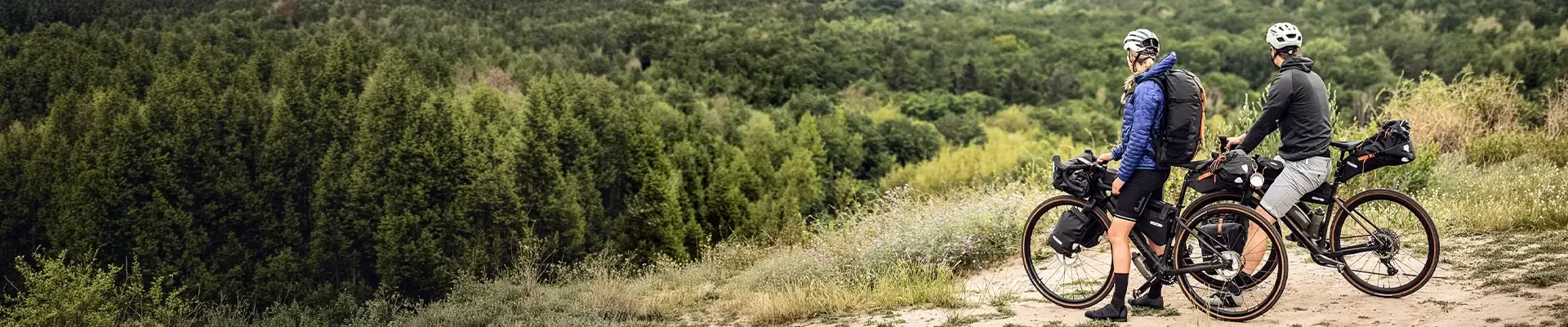
Find the right way to carry your gear
Choose cycling bags and luggage that suit your bike, your riding and what you need to take with you.
Whether you are heading out for a quick trail ride, commuting to work, exploring quiet gravel lanes or loading up for a multi-day adventure, the right luggage can make every ride more comfortable and enjoyable.
Modern cycling luggage comes in many forms, from backpacks and hydration packs to frame bags, panniers and bikepacking luggage. Each offers different advantages depending on where you are riding, what you are carrying and whether you prefer the weight on your body or on your bike.
There is no single best solution. The right choice is the carrying setup that suits the ride you are about to do. This guide will help you understand the options, decide where you want the weight to sit and choose the bags that best match your riding.
Carry It on You or Carry It on Your Bike?
Before choosing a particular bag, think about where you want the weight to sit. Some riders prefer to keep their belongings with them, while others find it more comfortable to let the bike carry the load.
Carry It on You
Backpacks, hydration packs, messenger bags and waist packs keep your gear with you on and off the bike.
Benefits
- Easy to move between different bikes.
- Your belongings stay with you when you park the bike.
- No rack or luggage mounts required.
- Works well for technical riding where keeping the bike agile matters.
Things to consider
- The weight is carried by your shoulders, back or hips.
- Larger packs can feel warm in hot weather.
- Heavy loads may become uncomfortable over longer distances.
Carry It on Your Bike
Frame bags, handlebar bags, panniers, rack bags and baskets allow the bike to carry much of the weight.
Benefits
- Less weight on your body.
- Greater carrying capacity.
- Often more comfortable for long rides and regular commuting.
- Allows the load to be organised across several bags.
Things to consider
- Some systems require a rack, fittings or suitable mounting points.
- Loading and removing the bags may take a little longer.
- A heavily loaded bike can feel different to steer and handle.
Rider Tip
Think about the ride before you think about the bag.
A short evening ride, a daily commute and a weekend bikepacking trip all place different demands on your luggage. Choose the smallest and simplest setup that comfortably carries what you genuinely need.
Choosing the Right Setup for Your Riding
Every riding style places different demands on your luggage. Start with the type of riding you do, then think about the length of the ride, the weather and how much water, clothing and equipment you need to carry.
Mountain Biking
Mountain bikers usually prioritise freedom of movement and keeping the bike agile on technical trails. Waist packs, hydration packs and riding backpacks are the most common options, with the choice depending largely on ride duration, weather and how much water or extra clothing you need.
For shorter rides, a waist pack may provide enough space for tools, snacks and water. Longer or more remote rides may call for a hydration pack or backpack, while heavier tools can often be carried on the bike in a compact frame bag or tool strap.
Ask Yourself
- ☐ How long will I normally be riding?
- ☐ How much water will I need?
- ☐ Will I need extra clothing or waterproof layers?
- ☐ Could I carry heavier tools on the bike instead of on my body?
Road & Gravel Cycling
Road and gravel riders often favour compact, streamlined on-bike storage that carries essentials without adding unnecessary bulk. A small saddle bag may be enough for a spare tube, tools and puncture-repair equipment on everyday rides.
Longer road rides or gravel adventures may benefit from a top tube bag, compact frame bag or handlebar bag for food, extra clothing and other items you want to keep close at hand. Multi-day gravel rides may combine several bags to spread the load around the bike.
Ask Yourself
- ☐ Am I riding locally or covering longer distances?
- ☐ Will I need extra food or clothing?
- ☐ Do I want access to snacks or essentials while riding?
- ☐ How much storage do I genuinely need?
Commuting & Leisure Cycling
Commuting often means carrying everyday items as well as cycling essentials. A backpack or messenger bag is easy to take with you when you arrive, while panniers and rack bags move the weight onto the bike and can be more comfortable over longer journeys.
If you regularly carry a laptop, lunch, waterproof clothing or shopping, a bike rack can form the basis of a practical luggage system. Baskets can also work well for relaxed urban riding and short everyday trips.
Ask Yourself
- ☐ Am I carrying a laptop or work equipment?
- ☐ Do I need to take the bag with me when I arrive?
- ☐ Will I carry shopping or heavier everyday items?
- ☐ Does my bike already have a rack or suitable mounting points?
Touring & Bikepacking
Longer-distance riding is about carrying enough equipment while keeping the bike balanced and predictable. Touring setups often use racks and panniers for generous capacity, while bikepacking systems spread equipment between frame, handlebar and saddle bags.
A simple overnight ride may only need a few compact bags, while longer journeys can require space for spare clothing, food, camping equipment and waterproof storage. Spreading the weight around the bike can help maintain more balanced handling.
Ask Yourself
- ☐ How many days will I be away?
- ☐ Will I be carrying camping equipment?
- ☐ How important is fully waterproof storage?
- ☐ Can I spread the weight across several bags?
Understanding Every Type of Cycling Bag
Cycling bags range from compact storage for a few essentials to complete luggage systems for commuting and multi-day adventures. Understanding where each bag sits, how much it carries and how it affects comfort will help you build the right setup.
On-Body Luggage
On-body bags move easily between bikes and keep your belongings with you when you stop. The main choice is how much capacity you need and whether you want the load carried across your shoulders, back or hips.
Backpacks
Cycling backpacks offer more storage than most waist packs or hydration packs, making them a versatile choice for commuting, longer rides and carrying extra clothing. Cycling-specific models are usually shaped to remain stable while riding and may include ventilated back panels, helmet attachments and organised tool compartments.
Many cycling backpacks are compatible with a hydration reservoir, while some mountain bike models include an integrated back protector. This adds impact protection without needing to wear a separate protective vest, although it can also increase weight and warmth.
What to Look for in a Cycling Backpack
- Capacity: choose enough space for your usual kit without encouraging unnecessary weight.
- Hydration compatibility: useful if you want to add a reservoir and drinking hose.
- Back protection: integrated protectors can add useful coverage for technical mountain biking.
- Ventilation: raised or channelled back panels can reduce heat build-up.
- Stability: chest and waist straps help stop the pack shifting on rough terrain.
Hydration Packs
Hydration packs include a reservoir and drinking hose, allowing you to drink without stopping or reaching for a bottle. They are particularly useful for mountain biking, longer off-road rides and routes where bottle access is awkward.
Backpack-style hydration packs generally offer more storage and larger reservoirs, while hydration waist packs use smaller reservoirs and keep the shoulders free. Reservoir sizes are typically around 1 to 3 litres. A larger reservoir carries more water, but it also adds noticeable weight when full.
What to Look for in a Hydration Pack
- Reservoir capacity: match the volume to your typical ride length and refill opportunities.
- Storage capacity: consider whether you also need space for tools, food and clothing.
- Backpack or waist pack: backpacks carry more, while waist packs leave your shoulders free.
- Hose routing: check that the hose is easy to reach and stays secure while riding.
- Fit: the pack should remain stable without straps needing to be overtightened.
Waist Packs
Waist packs carry tools, snacks and small essentials around the hips, leaving your shoulders and upper back free. They are popular for shorter mountain bike rides and riders who find backpacks too warm or restrictive.
Some waist packs carry bottles, some include a hydration reservoir and others support both. The best choice depends on how much water and storage you need.
What to Look for
- Capacity: enough space for your essential tools and ride supplies.
- Hydration: bottle, reservoir or combined carrying options.
- Stability: a wide, supportive belt helps reduce bouncing.
- Organisation: separate pockets make tools and food easier to find.
Messenger Bags
Messenger bags use a single shoulder strap and are designed for quick access on and off the bike. They suit commuting and urban riding, particularly when you want a bag that looks natural away from the bike.
What to Look for
- Stabilising strap: helps stop the bag swinging while riding.
- Laptop protection: useful for commuting with electronics.
- Weather resistance: important for year-round riding.
- Access: check that pockets and closures are practical when the bag is worn.
On-Bike Luggage
On-bike bags reduce the amount of weight carried by your body. Some attach directly to the frame, while others require a rack or compatible mounting points.
Frame Bags, Top Tube Bags & Tool Straps
Frame-mounted storage keeps weight close to the centre of the bike. Compact frame and top tube bags work well for tools, food, phones and small essentials, while tool straps provide a minimal way to secure an inner tube and basic repair kit.
Tool straps are particularly useful for mountain biking because they move dense items off your body without adding a bulky bag. The contents need to be secured carefully so they do not move or rub against the frame.
What to Look for
- Frame fit: check available space and cable clearance.
- Mounting stability: secure straps reduce movement and rubbing.
- Access: top tube bags are useful for items needed while riding.
- Frame protection: keep contact areas clean and consider protective tape.
Handlebar Bags
Handlebar bags place storage within easy reach and are useful for clothing, gloves, food and frequently used ride essentials. Small models work well for everyday riding, while larger roll-style bags form part of many bikepacking setups.
What to Look for
- Handlebar clearance: check space around controls, cables and lights.
- Tyre clearance: especially important on smaller frames and suspension forks.
- Mounting system: secure attachments reduce movement on rough surfaces.
- Access: choose a closure that suits how often you need the contents.
Saddle Bags
Saddle bags fit beneath the saddle and are commonly used for puncture-repair equipment, tyre levers, a multitool and a spare inner tube. They are especially popular with road and gravel riders because they provide compact storage without using jersey pockets.
They are less common on modern mountain bikes because larger bags can interfere with dropper seat posts or rear tyre clearance.
What to Look for
- Capacity: enough for your repair kit without unnecessary bulk.
- Seatpost compatibility: check straps and available post space.
- Tyre clearance: especially on small frames and bikes with suspension.
- Mounting security: the bag should not swing or rattle while riding.
Pannier Bags
Panniers attach to a bike rack and offer generous carrying capacity without placing the weight on your body. They are a strong choice for commuting, shopping, touring and riders who regularly carry heavier loads.
Panniers may be sold individually or as pairs. Using two bags allows you to balance heavier loads across both sides of the rack, while a single pannier may be enough for a typical commute.
What to Look for in Pannier Bags
- Rack compatibility: check that the fittings suit your rack tubing.
- Capacity: match the size to commuting, shopping or touring needs.
- Waterproofing: roll-top panniers are often chosen for wet-weather use because the closure limits water entry.
- Carrying handles or straps: useful once the bag is removed from the bike.
- Heel clearance: ensure your feet do not strike the bags while pedalling.
Rack Bags
Rack bags sit on top of a rear rack rather than hanging beside the wheel. They work well for everyday essentials, leisure rides and lighter commuting loads.
They are usually easier to carry away from the bike than a pair of panniers, but offer less overall capacity.
What to Look for
- Rack fit: check the base dimensions and mounting system.
- Quick release: useful if the bag is removed regularly.
- Expandable storage: adds flexibility when carrying extra layers.
- Shoulder strap or handle: helpful away from the bike.
Urban & Utility Storage
Baskets and racks make it easier to carry everyday items around town. They are practical foundations for shopping, commuting and relaxed leisure riding.
Bike Baskets
Baskets provide open, easy-access storage for shopping, small bags and everyday items. Front baskets keep the load visible, while rear baskets can carry larger items without affecting the handlebars.
What to Look for
- Front or rear mounting position.
- Compatibility with your bike or rack.
- Removable or permanently mounted design.
- Suitable load capacity.
Bike Racks
A bike rack creates a stable platform for panniers, rack bags and baskets. Most traditional racks attach to dedicated frame mounts, although some alternatives are designed for bikes without standard mounting points.
What to Look for
- Frame and wheel-size compatibility.
- Maximum load rating.
- Pannier rail and platform design.
- Mudguard and disc-brake clearance.
Accessories & Extras
Small accessories can extend the life of your luggage, improve weather protection or help adapt an existing bag to a different ride.
Dry Bags
Dry bags provide an additional waterproof layer inside panniers, backpacks or bikepacking bags. They can also help organise clothing and keep wet or dirty items separate.
What to Look for
- Capacity suited to the outer bag.
- Roll-top closure.
- Lightweight or heavy-duty construction.
- Shape that packs efficiently.
Bag Accessories
Bag accessories include replacement hydration reservoirs, hoses, bite valves, mounting straps, fittings and rain covers. They can refresh an existing bag or adapt it to changing needs.
What to Look for
- Compatibility with your existing bag.
- Correct reservoir or hose size.
- Secure replacement straps and fittings.
- Rain-cover sizing and attachment.
Rider Tip
You do not need to fit everything into one large bag.
Combining two or three smaller bags can spread the weight more evenly and keep frequently used items easier to reach. For example, tools might sit in a saddle or frame bag while food and clothing are carried in a handlebar bag.
Choosing the Right Capacity
Bag capacity is usually measured in litres, but the number alone does not tell you how useful a bag will be. Shape, opening size, internal organisation and where the bag sits can all affect what it carries.
Start with what you normally take on a ride, then allow a little extra room for food, changing weather or items picked up along the way. A bag that is too large can encourage overpacking, while one that is too small may leave you forcing closures or attaching loose items to the outside.
| Approximate Capacity | Typical Use | What It Might Carry | Common Bag Types |
|---|
| Under 2 litres | Short rides and essential repairs | Inner tube, tyre levers, compact multitool and small valuables | Saddle bags, tool straps and small top tube bags |
| 2–5 litres | Everyday rides and shorter off-road trips | Tools, snacks, phone, keys and a lightweight jacket | Waist packs, compact hydration packs and handlebar bags |
| 5–10 litres | Longer rides and light commuting | Extra clothing, food, tools, water and everyday essentials | Hydration packs, smaller backpacks and rack bags |
| 10–20 litres | Commuting and full-day riding | Waterproofs, lunch, work clothing, a compact laptop and ride equipment | Backpacks, messenger bags, panniers and larger rack bags |
| 20–40 litres | Heavier commuting loads, shopping and short tours | Clothing, larger laptops, groceries and overnight equipment | Large backpacks, single panniers or compact pannier pairs |
| Over 40 litres | Multi-day touring and carrying bulky equipment | Camping kit, several days of clothing, food and travel essentials | Pannier pairs and combined bikepacking systems |
Capacity examples are approximate. Bag shape, internal dividers and the size of individual items will affect what fits.
Rider Tip
Lay out your usual riding kit before choosing a capacity.
Seeing everything together gives you a clearer idea of the space you need. Remember that winter clothing and waterproof layers take up more room than summer kit.
Waterproof vs Water Resistant
Not every cycling bag described as weather resistant will keep its contents dry through prolonged rain. Understanding the difference matters when carrying electronics, spare clothing or overnight equipment.
Water Resistant
Water-resistant bags are designed to handle light rain, spray and damp conditions. They may use coated fabric and protected zips, but seams and openings can eventually allow water inside.
This level of protection is often enough for shorter rides or changeable weather, especially when sensitive items are placed inside an additional dry bag.
Waterproof
Waterproof bags use materials, sealed seams and closures designed to prevent water entering during sustained rain. Roll-top closures are common because they create fewer potential entry points than conventional zips.
Fully waterproof luggage is particularly useful for year-round commuting, touring and carrying items that must remain dry.
What to Check
- Seams: taped or welded seams offer better protection than ordinary stitched seams.
- Closures: roll-top designs generally offer stronger protection than exposed zips.
- Fabric: waterproof fabric may still be compromised by unsealed openings or attachment points.
- Rain covers: useful for adding protection to backpacks and bags that are not fully waterproof.
- Internal protection: a separate dry bag provides additional security for electronics and clothing.
Build Your Ideal Carrying Setup
A good luggage setup does not have to rely on one bag. Combining compact storage options can improve comfort, organise your equipment and make it easier to adapt the bike for different rides.
Trail Rider
Keep the setup stable and compact while leaving enough room for water, repairs and an extra layer.
- Waist pack or hydration pack.
- Tool strap or small frame bag.
- Backpack for longer or more remote rides.
Road Rider
Focus on compact storage that carries repair essentials without adding unnecessary bulk.
- Small saddle bag for tools and a tube.
- Jersey pockets for food and clothing.
- Compact handlebar bag for longer days.
Gravel Rider
Spread the load across the bike and keep food or navigation equipment easy to reach.
- Top tube bag for food and valuables.
- Frame bag for tools and heavier items.
- Handlebar or saddle bag for spare clothing.
Commuter
Prioritise comfort, weather protection and a bag that works well after you leave the bike.
- Backpack or messenger bag for simple portability.
- Single pannier to move weight off your body.
- Rack bag or basket for lighter everyday items.
Touring Rider
Balance generous capacity with predictable handling and reliable weather protection.
- Rear pannier pair for the main load.
- Handlebar or rack bag for quick access.
- Dry bags to separate and protect equipment.
Bikepacking Rider
Use the available frame space efficiently while keeping heavier items close to the centre of the bike.
- Frame bag for dense or heavy equipment.
- Handlebar bag for lightweight bulky items.
- Saddle bag for clothing or sleeping equipment.
Ask Yourself Before You Choose
- ☐ What do I genuinely need to carry on most rides?
- ☐ Would I rather carry the weight on my body or on the bike?
- ☐ Does my bike have the mounts and clearance required?
- ☐ How much weather protection do I need?
- ☐ Would several smaller bags be more practical than one large bag?

Cycling Bags & Luggage FAQs
What is the best type of cycling bag?
The best type depends on your riding and what you need to carry. Waist packs and hydration packs work well for mountain biking, saddle bags suit compact road essentials, and panniers are useful for commuting, shopping and touring.
Is it better to carry luggage on your body or on the bike?
Carrying luggage on your body makes it easy to move between bikes and keeps belongings with you when you stop. Carrying it on the bike reduces weight on your shoulders and can be more comfortable over longer distances.
What size cycling bag do I need?
Compact bags under 2 litres are usually enough for repair essentials. Around 5 to 10 litres suits longer rides, while commuting and touring may require 10 litres or considerably more. Lay out your usual equipment before choosing.
Can I fit panniers to any bike?
Panniers normally require a compatible rack. Many bikes have dedicated rack mounts, but alternatives are available for some bikes without traditional fittings. Always check frame, wheel-size and load compatibility.
Are waterproof cycling bags completely waterproof?
Bags described as waterproof should use waterproof materials, sealed seams and secure closures, but protection can vary by design. Check the manufacturer’s specification and use an internal dry bag for particularly sensitive items.
Can I use a normal backpack for cycling?
You can, especially for shorter trips. Cycling-specific backpacks generally offer a more stable fit, improved ventilation and features such as hydration compatibility, helmet carrying systems and organised tool storage.
Will a saddle bag work with a dropper post?
Small saddle bags may work with some dropper posts, but the bag and straps must not interfere with the moving section of the post. You also need enough clearance between the bag and rear tyre when the suspension is compressed.
How should I distribute weight across bikepacking bags?
Carry denser items low and close to the centre of the bike, often inside a frame bag. Lighter, bulkier items such as clothing and sleeping equipment can be carried in handlebar and saddle bags.
Continue Your Research
The right luggage is only one part of preparing for a ride. Explore our other buying guides for help choosing equipment that suits your bike and the way you ride.
Ready to Carry More?
Explore cycling bags and luggage for mountain biking, road riding, commuting, touring and everyday adventures.
Shop Bags & Luggage