
Your complete guide to choosing the right electric bike
Understand e-bikes, compare the main types, and find the perfect match for your riding.
More miles. More smiles. Less effort when you want it.
Electric bikes — often called e-bikes or ebikes — have opened up cycling to more people, more places, and more types of riding than ever before. Whether you’re commuting across town, exploring gravel lanes, hauling kit (or kids), or pushing deeper into the hills, the right e-bike can completely change how — and how often — you ride.
This guide is here to help you understand electric bikes, the different types available, and how to choose one that fits your riding, your terrain, and your life. Think of it as a starting point — with clear explanations, practical advice, and links to more in-depth guides when you’re ready to go further.
What is an electric bike (e-bike)?
An electric bike (or e-bike) is a bicycle fitted with a motor and battery that assists your pedalling, rather than replacing it. You still ride like a normal bike — the motor simply adds power when you need it.
In the UK, e-bikes are limited to pedal-assist only, with assistance up to 15.5mph (25km/h), and a maximum motor power of 250W.
Once you reach the speed limit, the motor smoothly disengages and you continue under your own power — just like riding a regular bike.
Why choose an electric bike?
E-bikes aren’t about cheating — they’re about choice, freedom, and possibility. Riders choose them for all sorts of reasons:
- Riding further and more often
- Flattening hills and beating headwinds
- Making commutes faster and less sweaty
- Carrying loads without the strain
- Keeping pace with fitter riding partners
- Recovering from injury or managing fatigue
- Simply having more fun on the bike
At their best, electric bikes don’t change what cycling is — they remove the barriers that stop people riding.
Types of electric bikes
There’s no single “best” e-bike — only the one that suits how and where you ride. Here’s a quick overview of the main electric bike types you’ll find at Uprise.
Electric Mountain Bikes (eMTBs)
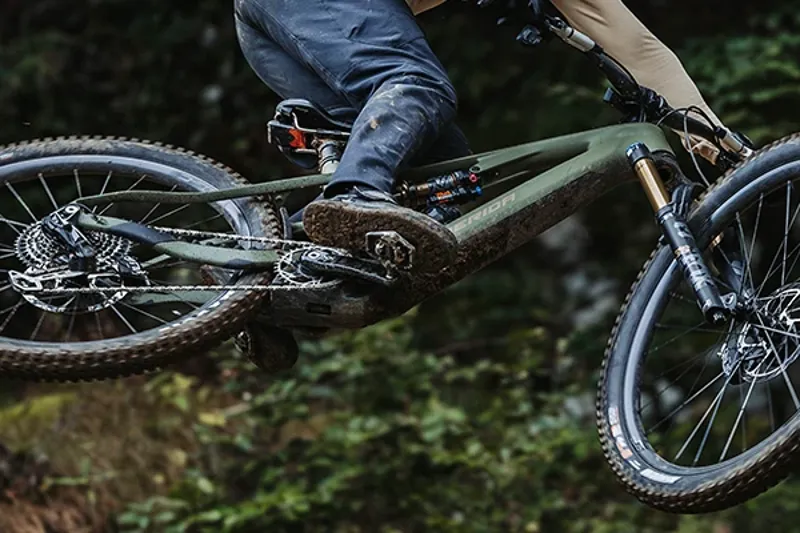
Built for trails, climbs, and technical terrain, electric mountain bikes combine capable suspension and geometry with powerful mid-drive motors. You’ll find different styles to suit different riding — from hardtail eMTBs for lighter weight and efficiency, through full-suspension trail eMTBs for all-round riding, to burly enduro eMTBs built to handle steeper, rougher terrain at speed.
What to look for (eMTBs)
- Motor support that matches your terrain (torque and ride feel)
- Battery capacity (Wh) for the rides you actually do
- Suspension setup and travel for your trails
Electric Urban Bikes
Electric urban bikes are designed for everyday riding — commuting, errands, leisure rides and city streets — with options that range from more active, forward-leaning riding positions to upright, comfort-focused designs. Most feature a suspension fork to smooth out rough roads, kerbs and potholes, making daily riding more relaxed and controlled.
What to look for (urban e-bikes)
- Practical kit: mudguards, rack mounts and integrated lights
- Comfort and fit for daily riding
- Motor type that suits your route (hub-drive for flatter rides, mid-drive for hills)
Electric Road Bikes
Electric road bikes look and feel much like traditional road bikes, but add subtle assistance for longer rides and steeper climbs, using lightweight motor systems designed to help you accelerate smoothly up to speed without holding you back once you’ve exceeded the 15.5mph assistance limit.
What to look for (road e-bikes)
- Low overall weight and a natural ride feel above 15.5mph
- Geometry that matches your riding (endurance comfort vs racier positions)
- Battery capacity that suits your ride length
Electric Gravel Bikes
Electric gravel bikes blend versatility with adventure, offering support when routes get rough, loose or long. They share a lot with electric road bikes — lightweight frames, efficient motors and a fast feel on tarmac — but use wider tyres as the key difference, adding comfort, grip and confidence when surfaces turn broken or unpaved.
They’re designed to feel fast and efficient on the road, while offering extra comfort, grip and confidence when routes head off the beaten track.
What to look for (gravel e-bikes)
- Tyre clearance and tread choice for your routes
- Stable handling for mixed terrain
- Battery capacity (Wh) if your rides are long and remote
Electric Cargo Bikes
Electric cargo bikes are built to carry — whether that’s shopping, tools, or children. You’ll generally find two main styles: front-loading cargo bikes, with a flatbed or box between the handlebars and front wheel designed to carry larger loads with maximum stability and visibility, and rear-loading cargo bikes, which use an extended rear rack designed to carry passengers or panniers.
What to look for (cargo e-bikes)
- Carrying format that matches your needs (front-load vs rear-load)
- Stable handling and strong braking under load
- Motor support and battery capacity for heavier riding
Electric Folding Bikes
Compact, clever and easy to store, electric folding bikes are designed for convenience, using subtle pedal assistance and lightweight motor systems that keep overall weight lower than most other e-bikes while still helping you get up to speed.
What to look for (folding e-bikes)
- Fold speed and carry-friendly size
- Total weight if you lift it regularly
- Hub-drive motors are common here — smooth, simple and great for flatter routes
Women’s Electric Bikes
Women’s electric bikes may feature women-specific frame geometry, component choices and contact points — or may be unisex designs offered in a wide size range. Many modern brands focus on fit, adjustability and rider confidence, rather than making assumptions based on gender.
What to look for (women’s e-bikes)
- Correct sizing first — then dial in comfort with cockpit and saddle setup
- Confidence-inspiring handling
- Motor and battery that match your routes
Electric bike power, range and weight
Motor power, battery size and overall weight all shape how an e-bike feels on the road or trail — not just when you’re riding, but when you’re moving, lifting or storing the bike day to day.
- More power = stronger assistance on climbs and under load
- Bigger batteries = longer range, but more weight
- Lighter systems = a more natural ride feel and easier lifting
The right balance depends on where you ride, how far you go, and whether you need to carry the bike upstairs, onto racks, or into storage.
Electric bike motors and power
Most modern e-bikes use mid-drive motors positioned at the cranks for balanced handling and a natural ride feel. Many entry-level electric bikes and electric folding bikes use hub-drive motors built into the wheel for smooth, steady assistance and a lower overall cost.
| Motor type | Ride feel & support | Best for | Cost & complexity |
| Mid-drive | Very natural, responsive assistance that reacts directly to your pedalling. Strong support on hills and when carrying weight. | Performance-focused riding, hilly terrain, electric mountain bikes, electric gravel bikes and higher-end urban e-bikes. | Higher cost due to advanced sensors, integration and drivetrain interaction. |
| Hub-drive | Smooth, steady assistance that feels consistent and easygoing, especially on flatter routes. Less responsive on steep climbs. | Entry-level electric bikes, electric folding bikes, everyday urban riding and flatter commutes. | Lower cost and simpler design, making electric bikes more accessible. |
Key things to consider across all e-bike motors include torque (Nm), assist modes, and whether you prefer punchy performance or smooth, consistent support.
Electric bike batteries: range, capacity and charging
Battery capacity is measured in watt-hours (Wh). A higher number generally means more range, but real-world distance depends on terrain, rider weight, assist mode and conditions.
Things to think about:
- Typical ride length
- Access to charging at home or work
- Whether the battery is removable
- Charging time (often 3–6 hours)
Many riders find they need less range than expected — especially as fitness builds.
How to choose the right electric bike for you
Start with how you want to ride, not the spec sheet. Use these quick checks to narrow down your choice with confidence.
1) Match the bike to your routes
City streets, long road rides, gravel lanes, or steep trails — the terrain points you straight to the right type of e-bike.
2) Think in Wh for range
Battery capacity (Wh) is the quickest way to estimate range — then adjust expectations for hills, load, wind and assist mode.
3) Choose the motor feel you prefer
Mid-drive motors feel naturally responsive and climb brilliantly. Hub-drive motors are smooth, simple and great value for flatter routes.
4) Be honest about storage and lifting
If you carry your bike upstairs or store it in tight spaces, weight and size matter as much as range and power.
Pedals & E-Bike Riding
Pedal requirements vary across different types of electric bikes. Many urban, folding and cargo e-bikes are supplied with pedals that are perfectly suited to their intended use, while more performance-focused e-bikes benefit from an upgrade.
When the supplied pedals are all you need
Most urban, folding and cargo e-bikes come with flat pedals designed for everyday riding. These pedals prioritise comfort, ease of use and durability, making them ideal for commuting, utility riding and frequent stop-start journeys.
- Comfortable for riding in normal shoes
- Easy to get on and off in traffic
- Well suited to commuting and utility riding
When upgrading pedals makes sense
Performance-oriented e-bikes — such as electric mountain bikes, electric road bikes and electric gravel bikes — are supplied with very basic flat pedals intended only for test rides and shop demos. These bikes place higher demands on pedals as they're ridden faster, on varied terrain, and often over longer distances, where efficiency and foot stability matter more. Proper flat or clipless pedals are an essential upgrade.
- Better control when riding at higher speeds
- Improved pedalling efficiency on longer rides
- More secure foot position on rough roads or trails
- Reduced fatigue over distance
Electric bike maintenance and care
E-bikes are built to be robust, but a little care goes a long way — especially with batteries and drivetrains.
- Keeping the drivetrain clean
- Charging batteries at room temperature
- Storing your e-bike in a warm, dry place where possible, especially over winter
- If your battery is removable, bring it indoors during winter to protect performance and prolong battery life
- Avoiding full battery drain where possible
- Regular servicing, especially for high-use bikes
Look after your e-bike, and it’ll reward you with thousands of great miles.
How much should you spend on an electric bike?
Electric bikes cover a wide price range, reflecting differences in components, motors, battery size and overall finish. As a general guide, e-bikes tend to fall into four broad price tiers:
| Price range (approx.) | What to expect |
| £1,000 – £1,800 | Entry-level electric bikes with hub-drive motors, smaller batteries and simpler components. Ideal for flatter commutes, short trips and riders new to e-bikes who want accessible electric assistance at a lower cost. |
| £1,800 – £2,800 | Mid-range options with better finishing kits, larger batteries and, in some cases, mid-drive motors. A strong choice for regular commuting, leisure riding and mixed terrain. |
| £2,800 – £4,500 | Performance-focused e-bikes with refined mid-drive motor systems, lighter frames and improved ride feel. Common across electric gravel bikes, electric road bikes and higher-end urban e-bikes. |
| £4,500+ | Premium electric bikes with advanced motors, lightweight frames, high-capacity batteries and top-tier components. Typical of high-end eMTBs, cargo bikes and flagship models built for demanding riding. |
The best value e-bike isn’t about spending the most — it’s about choosing a bike that suits your riding, your terrain and how often you plan to ride.

Electric bike FAQs
Here are the questions riders most often ask when choosing an electric bike.
Do electric bikes need a licence or insurance?
No — UK-legal electric bikes that meet EAPC regulations are classed as bicycles, so you don’t need a licence, insurance or road tax.
Do you have to pedal an electric bike?
Yes. UK e-bikes are pedal-assist only, meaning the motor supports your pedalling rather than powering the bike on its own.
How fast do electric bikes go?
Electric assistance is limited to 15.5mph (25km/h). Above that speed, the motor smoothly cuts out and you continue under your own power.
Can you ride an e-bike without assistance?
Yes. You can ride with the motor switched off or above the assistance limit — it will feel like a normal bike, though with a little extra weight.
How far can an electric bike go on one charge?
Range varies widely depending on battery size, terrain, rider weight and assist mode. Many e-bikes comfortably cover 30–80 miles, with some capable of more in favourable conditions.
How long do e-bike batteries last?
Most modern batteries last several years and hundreds of charge cycles when properly cared for. Good charging habits and sensible storage help maximise lifespan.
How long does it take to charge an electric bike battery?
Charging typically takes 3–6 hours, depending on battery capacity and charger type.
Are electric bikes heavy?
Electric bikes are heavier than non-assisted bikes, but weight varies a lot. Lightweight road and folding e-bikes can feel surprisingly manageable, while cargo bikes and eMTBs prioritise power and stability over low weight.
Are electric bikes good for fitness?
Yes. You still pedal and control the effort, making e-bikes a great way to build fitness, ride further and stay consistent.
Can you ride electric bikes in the rain?
Yes. Electric bikes are designed to be weather-resistant and suitable for year-round riding, though regular cleaning and maintenance are recommended.
What’s the difference between hub-drive and mid-drive electric bikes?
Hub-drive e-bikes use a motor in the wheel for smooth, steady assistance and lower cost. Mid-drive e-bikes place the motor at the cranks for a more natural ride feel and stronger climbing performance.
Continue your research with more Uprise guides
Ride further. Ride smarter. Ride your way.
Ready to find your electric bike?
Explore our full range of electric bikes for every kind of rider — from everyday commutes to big adventures.